What If There Was No Moon?
Walk on slightly warm water, look into the distance and collect shells. Anyone who has been to the North Sea knows what it is — their shallow water. This place, which goes under water at high tide and drains at low tide, exists only because of the Moon. Because it makes sure that this strip of land several kilometers wide is flooded and drained twice a day.
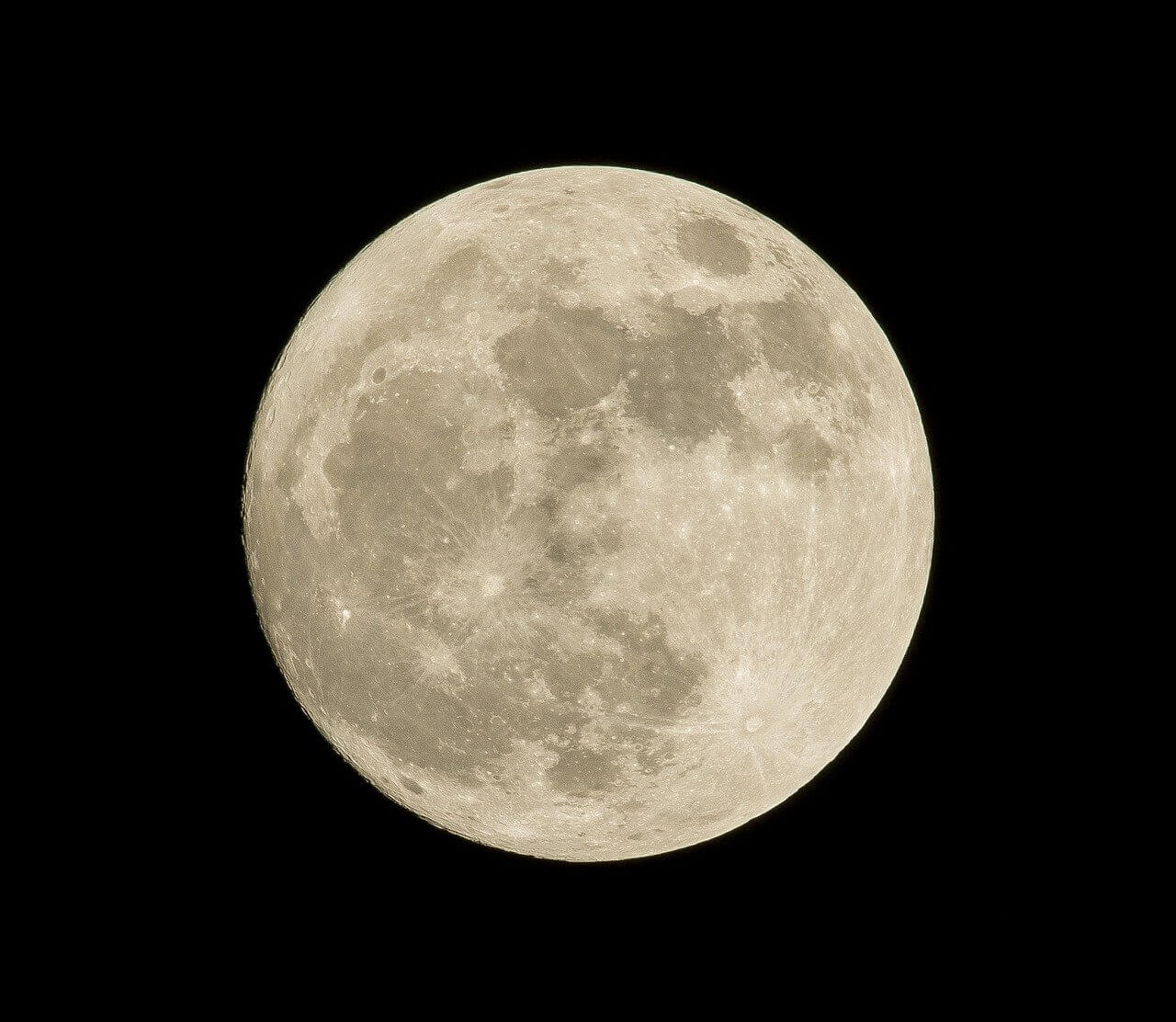
But the Moon provides not only a beautiful landscape, tides and shallow water. There are many indirect effects. However, the Moon plays a fundamentally important role for life on Earth. “The most important influence of the Moon on the Earth is that it has been stabilizing the climate for more than four billion years”, explains geologist Ulrich Kohler from the Institute of planetary science at the German air and space center in Berlin. Because without the Moon, the Earth’s axis would fluctuate much more. The equator is at an angle of 23.5 degrees to the Earth’s orbit around the Sun. That’s why there are different seasons — as we know them. This angle of inclination is very stable, and it is due to the Moon and its gravitational force.
What if there was no Sun, back in the 1990s, calculated a group of scientists led by French astronomer Jacques Laskar: over the past billions of years, the Earth’s tilt would have changed by 85 degrees. This would mean that the Earth’s axis of rotation would be at the level of its orbit.
You can see what this looks like using the example of Uranus. With its tilt of 97 degrees, it revolves around the Sun so that during one half of the Sun turned its Northern hemisphere and during the second half of the year— South. If the same thing were happening on Earth, the climate would be different: “If there were no Moon, it is likely that temperatures on Earth would reach extreme levels”, — explains Kohler. In addition, according to him, our planet would be much more blowing of a strong wind.
Without the Moon, there would be no life on Earth itself, with its much shorter days and much harsher climate. “Weather conditions on Earth have been relatively stable for four billion years. And this is what may have contributed to the emergence of life”, — said the scientist.

